
Psalm 119:41-48 ו (Vav)
A journey through Psalm 119

Psalm 119:41-48 ו (Vav)
Let your steadfast love come to me, O Lord, your salvation according to your promise;
then shall I have an answer for him who taunts me, for I trust in your word.
And take not the word of truth utterly out of my mouth, for my hope is in your rules.
I will keep your law continually, forever and ever,
and I shall walk in a wide place, for I have sought your precepts.
I will also speak of your testimonies before kings and shall not be put to shame,
for I find my delight in your commandments, which I love.
I will lift up my hands toward your commandments, which I love,
and I will meditate on your statutes.
(ESV)
Salvation
For many Christians in the West, boldly speaking the name of Jesus is a terrifying prospect. We may fear ridicule or loss of social status at work or online. We squirm uncomfortably when people around us bash religion or say negative things about Christians. When the media makes all Christians sound like political lunatics or uneducated oafs, we tend to retreat instead of respond.
This section of Psalm 119 offers a better way of thinking when we start to feel the taunts of the world falling on us. God’s steadfast love, or ḥeseḏ (חֲסָדֶךָ) is with us and within us; we are not without power. When Jesus provided our salvation at the cross and resurrection, we were offered a direct connection to the Father. When we feel the world criticizing our faith, we can focus on the greatness of His mercy and grace—both for us and for those who speak poorly of our brothers and sisters in Christ. Spurgeon reminds us that,
Salvation is an aggregate of mercies incalculable in number, priceless in value, incessant in application, eternal in endurance. To the God of our mercies be glory, world without end (Spurgeon 3898).
We have the answer for the taunts when we continually meditate on the Word. The more the Word becomes part of our daily practice, the better we are able to respond “as one approved, a worker who has no need to be ashamed, rightly handling the word of truth“ (2 Timothy 2:15).
Freedom
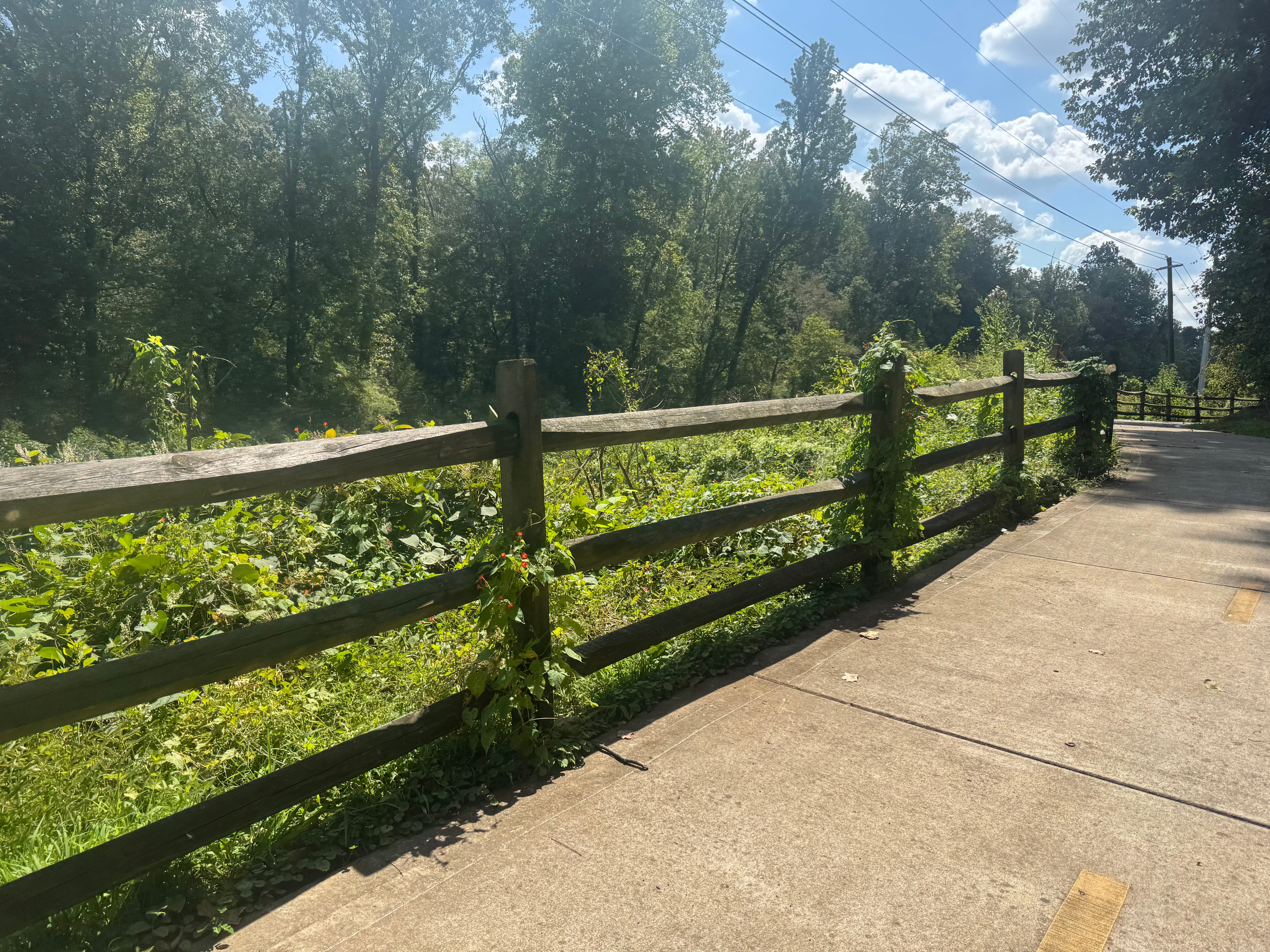
Our time studying and meditating on the Word is ultimately freeing. We know what is true and good, so the words of those who make God their enemy should not make us quake or waver. We walk “in a wide place” (v 45), in any and every direction prompted by the Spirit. We are not narrowly confined by the culture around us and what it thinks Christianity is. We must not be surprised that the world hates those who follow Jesus (1 John 3:13). At the same time, we cannot allow their disdain to affect our joy or prevent us from speaking the truth in love (Psalm 119: 46; Ephesians 4:25). We are free in Christ to live, fully alive, in spite of societal consequences.
In 2024, Darren Carlson posted a baptism questionnaire from a church in South Asia. Believers seeking baptism in a hostile environment needed to consider the cost: lose the blessing of your father, lose your job, forgive those who persecute and share the love of Jesus, suffer beatings, prison, and even death. The International Mission Board (2020) counted more than 29,000 baptisms in 2019. While the questionnaire and the statistic are not connected, the reality for many believers around the world is more than a Western snubbing or social loss. Yet these brothers and sisters do not succumb to fear; they live in joy, knowing that their eternal freedom is secure.
Worship
The proper response to those who taunt and jeer at people who follow Jesus is continued faithfulness to the truth and walking freely in it, without shame or fear. The proper posture before the God of ḥeseḏ (חֲסָדֶךָ) is worship, arms lifted to the Father, singing, “Holy, holy, holy, is the Lord God Almighty” (Revelation 4:8). His mercies are new every morning and His faithfulness never ends (Lamentations 3:23). The world may threaten, mock, or reject, but it cannot take away our freedom secured in Christ.
Post from 2020:
There is a clear and distinct connection between God’s love and God’s law; they co-exist. Our testimony as believers is rooted in how we both reconcile and live out both love and law. It’s recursive: the law shows us our utter helplessness to be holy, His love provided our salvation, and our appropriate response is to meditate and speak on the law while proclaiming His love through actions. It should be no surprise that James wrote that faith without works is dead (James 2:17).
We study the Word so that we may have answers to our questions and for those who question us (regardless of their motives). Keeping the law is worked out by our lived experiences and our words (2 Timothy 2:15, 4:2; James 1:22). The more we study the law, the more we understand the depth of God’s love for us, and the quicker we are to see His hand at work in whatever situation we find ourselves. We are able to speak the truth in love when we begin by lifting our hands to God’s commandments and meditating on His statutes.
I wrote in the margin of my Bible, “Love led to salvation. Law leads to answers. Both should be proclaimed without hesitation or shame. It is Lord in whom we live and breathe and have our being (Acts 17:28). It is the Lord Christ whom we serve (Colossians 3:23).
A NOTE:
Psalm 119 is too rich and too vast to leave to my own thoughts. Six years ago I was content to share my personal responses as I navigated the events of the summer of 2020, but since then, I have learned to frame my responses in light of scholarship and thoughtful research.
Psalm 119 is also too rich and too vast to delve deeply into centuries of scholarship for anything less than a multi-volume publication, the scope of which is beyond a simple devotion on Substack. For this project, then, I have decided to limit my external references to a few trusted sources that will be listed in the “References and Resources” at the end of each article. Primarily, I will rely on the wisdom of Charles Haddon Spurgeon’s treatment of Psalm 119 in The Treasury of David: The Complete Seven Volumes, the NRSV Cultural Backgrounds Study Bible, and Blue Letter Bible online for its translations. Bible Gateway has extensive resources and I will include those as I use them.

References and Resources
Blue Letter Bible. Sowing Circle, 1996–2025, www.blueletterbible.org. Accessed 13 Apr. 2026.
Carlson, Darren [@DarrenMCarlson]. “This is a baptism questionnaire from a church in South Asia.” X, 2 May 2024, 7:18 p.m., x.com/DarrenMCarlson/status/1786173390388068639. Accessed 18 May 2026.
Coogan, Michael D., et al., editors. The New Oxford Annotated Bible with the Apocrypha: New Revised Standard Version. 5th ed., Oxford University Press, 2018.
“Highlights from South Asia.” International Mission Board, by IMB Staff, 24 Sept. 2020, www.imb.org/2020/09/24/highlights-south-asia/. Accessed 18 May 2026.
The Holy Bible, English Standard Version. Crossway Bibles, 2001. Bible Gateway, www.biblegateway.com. Accessed 13 Apr. 2026.
The Holy Bible, Holman Christian Standard Bible. Holman Bible Publishers, 2015. (Note: I like this one’s wide margins for annotation.)
*Spurgeon, Charles H. The Treasury of David: The Complete Seven Volumes. Hendrickson Publishers, 2004. Kindle ed. (Note: A hard copy in three volumes is available here.)
Walton, John H., and Craig S. Keener, editors. NRSV Cultural Backgrounds Study Bible. Zondervan, 2019. (Note: the NRSV is out of print, but the NIV is available here, and the NKJV here.)
*I cannot recommend this text highly enough. Each page’s wisdom demands reflection and return to the Scriptures.